Wicked Brush: A Practical Evaluation for Horror and Dark Design Projects
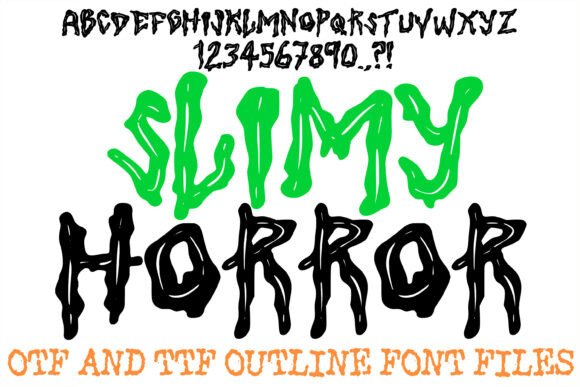
In the specialized niche of horror typography and dark aesthetic design, finding a typeface that balances atmospheric dread with functional legibility is a persistent challenge. Wicked Brush enters this space as a display font specifically engineered to evoke unease and mystery. Unlike generic "scary" fonts that rely on clichéd blood drips or jagged edges, Wicked Brush achieves its effect through texture and stroke dynamics. It simulates the appearance of rough, uncertain brushwork where black paint clings heavily to the bristles, creating a visual impression of instability and raw emotion. For designers, marketers, and content creators working within the horror, thriller, or occult genres, understanding the specific utility and technical capabilities of this font is essential for determining its place in a professional asset library.
Visual Characteristics and Atmospheric Impact
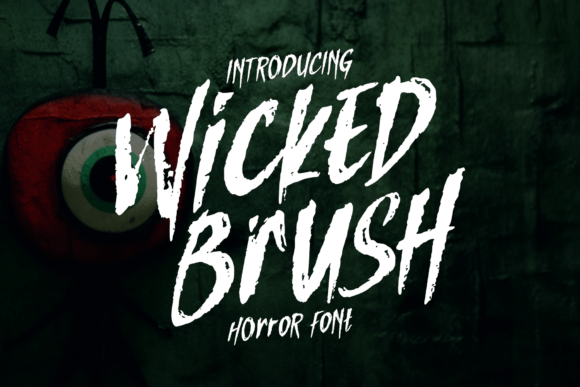
The primary value proposition of Wicked Brush lies in its textural authenticity. The letterforms are constructed with sharp lines intersecting with organic, ragged strokes. This combination prevents the font from looking digitally sterile; instead, it retains the analog imperfection of physical media. Each glyph appears as though it were applied with hesitation or force, resulting in varying ink density that mimics traditional painting techniques. This "uncertainty" in the stroke is what generates the eerie atmosphere. It avoids the polished look of standard serif or sans-serif typefaces, signaling to the viewer immediately that the content is unconventional or unsettling.
From a design psychology perspective, this irregularity triggers a subtle cognitive dissonance. The human eye expects uniformity in typography, so when letters appear unstable or wet, it creates a subconscious tension. This makes Wicked Brush particularly effective for projects requiring an immediate emotional hook. However, this same characteristic dictates its usage limits. The font possesses a strong personality that can easily overwhelm a layout if overused. It functions best as a headline or accent element rather than a workhorse for body copy. The visual weight is significant, meaning it demands ample negative space to breathe and maintain its mysterious quality without becoming illegible noise.
Technical Specifications and Workflow Integration
Beyond aesthetics, the practical viability of any display font depends on its technical foundation. Wicked Brush is distributed in both OTF (OpenType) and TTF (TrueType) formats, ensuring broad compatibility across industry-standard software like Adobe Illustrator, Photoshop, InDesign, and Affinity Designer. The inclusion of web font files extends its utility to digital projects, allowing for consistent branding across print posters and landing pages for events or movie promotions.
A critical feature for professional typographers is the support for standard glyphs and ligatures. Ligatures are particularly important in brush-style scripts because they address the awkward spacing issues that often occur when individual characters are placed side-by-side. Properly designed ligatures in Wicked Brush ensure that connecting strokes flow naturally, maintaining the illusion of continuous handwriting or painting. Without these, the font would require excessive manual kerning, reducing workflow efficiency. Additionally, the installation process is straightforward for both PC and Mac environments, minimizing setup friction for freelancers and agencies operating under tight deadlines.
Multilingual Support and Global Applicability
One of the most significant advantages of Wicked Brush over many niche horror fonts is its extensive multilingual support. Many display typefaces in this genre are limited to basic English character sets, rendering them useless for international campaigns or localized merchandise. Wicked Brush supports a comprehensive range of Latin-based languages, including but not limited to:
- Western European: English, French, German, Spanish, Portuguese, Italian, Dutch
- Nordic: Danish, Norwegian (Bokmål & Nynorsk), Swedish, Finnish, Faroese
- Eastern/Central European: Estonian, Latvian, Lithuanian, Polish, Czech (via Latin ext)
- Celtic & Regional: Irish, Scottish Gaelic, Welsh, Breton, Cornish, Manx
- African Languages: Afrikaans, Swahili, Zulu, Xhosa, Shona, Somali, Kinyarwanda
- Other: Indonesian, Filipino, Turkish, Uzbek Latin, Quechua
This breadth of coverage allows creators to maintain brand consistency across global markets. A Halloween event organizer in Berlin, a horror publisher in Mexico City, or a metal band touring Scandinavia can all utilize the same typographic identity without resorting to fallback fonts that break the visual immersion. For educators and publishers dealing with folklore or regional mythology, this language support transforms Wicked Brush from a novelty into a viable tool for culturally specific storytelling.
Practical Applications and Use Cases
Evaluating Wicked Brush requires looking at specific scenarios where its strengths align with project goals. Its high-contrast, textured nature makes it ideal for large-format printing where detail is visible. Movie posters, book covers, and album art are natural habitats for this typeface. In these contexts, the font acts as a visual shorthand for the genre, communicating tone before the audience reads a single word. The "magical power" attributed to the font is essentially its ability to serve as a graphic element as much as a textual one.
For merchandise design, such as t-shirts, tote bags, or stickers, Wicked Brush performs well due to its bold stroke weight. Thin, intricate horror fonts often fail in screen printing or embroidery, losing detail during production. The substantial paint-like quality of Wicked Brush ensures reproduction fidelity across various substrates. Digital marketers will also find value in social media graphics and YouTube thumbnails, where the font’s distinct silhouette remains recognizable even at small sizes or low resolutions.
However, professionals should exercise caution when applying this font to corporate or institutional horror-adjacent projects. While excellent for entertainment and artistic expression, its aggressive styling may be inappropriate for sensitive topics, true crime documentaries focusing on victim advocacy, or medical/psychological content regarding fear. Contextual awareness is key; the font conveys stylized fear, not necessarily respectful solemnity.
Assessing Long-Term Value and Limitations
When considering the acquisition of Wicked Brush, designers must weigh its specialized nature against long-term utility. As a thematic font, it is inherently tied to current trends in horror and dark aesthetics. While the brushstroke style has historical roots in expressionism and calligraphy, specific interpretations can feel dated as design trends shift. Therefore, it is best viewed as a targeted solution for specific campaigns rather than a foundational typeface for a diverse portfolio.
Legibility remains the primary constraint. At smaller point sizes, the rough edges and internal texture can cause characters to bleed together, reducing readability. Testing at actual output size is mandatory. What looks evocative on a 24-inch monitor may become indecipherable on a business card or mobile banner. Furthermore, because the font carries such strong atmospheric baggage, pairing it requires care. It generally works best alongside clean, neutral sans-serifs or classic serifs that provide structural contrast. Pairing it with other distressed or decorative fonts usually results in visual chaos.
Despite these limitations, Wicked Brush offers genuine value for its intended audience. It solves a specific problem: providing high-quality, multilingual, technically sound typography for dark themes without resorting to amateurish clichés. For freelancers building a toolkit for seasonal clients, authors self-publishing genre fiction, or brands launching limited-edition dark aesthetics products, it represents a reliable asset. The combination of OpenType features, web readiness, and extensive language support elevates it above free alternatives that often lack these professional necessities.
Final Considerations for Creative Professionals
Ultimately, Wicked Brush succeeds because it treats horror typography as a discipline rather than a gimmick. It respects the intelligence of the designer by providing a flexible, well-crafted tool that responds to proper typographic treatment. Its effectiveness is directly proportional to the skill of the user; it rewards careful kerning, thoughtful hierarchy, and appropriate context. For those seeking to convey profound mystery or unexpected magical power in their visual communications, this font delivers a distinct and usable voice. By understanding its technical parameters and respecting its atmospheric weight, professionals can leverage Wicked Brush to create compelling, immersive designs that resonate with audiences seeking the darker side of creativity.