Pawprint Font: Textured Typography for Pet Projects
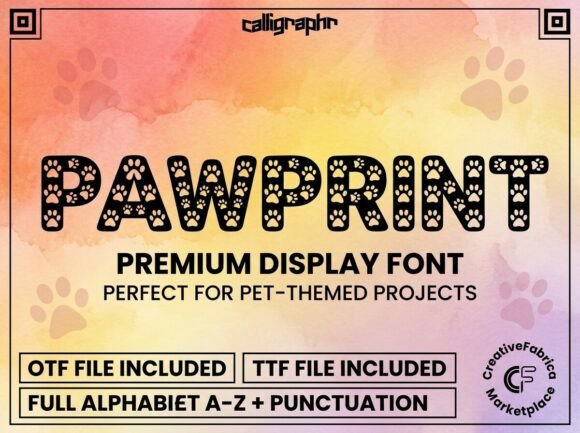
Unleash a wave of absolute cuteness and high-contrast texture upon your creative canvas with Pawprint, a premium display font that redefines how we approach animal-themed design. Breaking away from traditional flat typography, this ultra-chunky, rounded sans-serif typeface turns your headings into an adorable celebration of our favorite four-legged friends. Rather than relying on standard solid fills or simple outlines, Pawprint utilizes a sophisticated negative-space technique where heavy character walls are hollowed out to showcase a high-density, repeating pattern of puppy and kitten paw tracks. This clever carving of texture creates immediate visual interest and emotional connection, making it an extraordinary choice for anyone looking to infuse warmth and personality into their visual communications.
Understanding the Unique Texture Mechanics
When selecting typography for pet-related projects, designers often struggle to balance readability with thematic relevance. Standard fonts can feel too corporate or sterile, while novelty fonts often sacrifice legibility for gimmicks. Pawprint bridges this gap through its distinct structural design. The font operates on a principle of high-contrast aesthetics. The outer silhouette of each letter is bold, rounded, and substantial, ensuring that the word shape remains clear even from a distance. However, the interior fill is where the magic happens. Instead of ink, the negative space forms a seamless mosaic of paw prints.
This density is crucial for the font’s success. A sparse pattern might look accidental or messy, but the high-density arrangement in Pawprint creates a cohesive texture that reads as a deliberate graphic element. For creators using vinyl cutting machines like Cricut or Silhouette, this internal detailing adds a layer of complexity that elevates simple text into intricate artwork. It transforms a basic headline into a tactile experience, suggesting softness and playfulness without requiring additional clipart or background elements. The font essentially does double duty, serving as both communication and illustration simultaneously.
Ideal Applications for Creative Entrepreneurs
The versatility of this textured typeface extends far beyond simple greeting cards. For small business owners and freelancers in the pet industry, branding consistency is vital, yet many struggle to find assets that feel professional yet approachable. Pawprint serves as an excellent anchor for custom pet boutique branding. When used on packaging tags, thank-you cards, or storefront signage, it instantly signals to customers that the brand understands the joy of pet ownership. The chunky weight of the letters ensures they remain visible on product shelves, while the internal pattern reinforces the niche market appeal.
Veterinary clinics and animal shelters also benefit significantly from this aesthetic. Promotional flyers for adoption events or wellness clinics often need to soften the clinical nature of medical services. Using Pawprint for headers on event posters or social media graphics introduces a sense of comfort and community. It tells potential adopters or clients that the environment is welcoming and compassionate. Similarly, educators and authors creating children’s animal storybooks will find that this typeface captures the attention of young readers. The recognizable shapes within the letters provide an extra layer of engagement, turning reading time into a visual discovery game.
- Pet Apparel Design: Create eye-catching slogans on t-shirts and hoodies where the texture remains visible even after printing.
- Vinyl Crafts: Perfect for water bottles, car decals, and laptop stickers where intricate cuts add perceived value.
- Social Media Headers: Use for Instagram highlights or Facebook banners to establish a consistent, cute theme.
- Fundraising Materials: Make donation requests and charity gala invitations stand out with emotional resonance.
Practical Considerations for Digital and Print Use
While Pawprint is undeniably charming, achieving the best results requires understanding its technical behavior across different mediums. Because the defining feature of this font is its internal negative space, scale is the most critical factor in your workflow. If the text is set too small, the delicate paw patterns may bleed together during printing or fail to cut cleanly on vinyl plotters. This is strictly a display font, meaning it is engineered for headlines, titles, and short phrases rather than body copy. Attempting to use it for paragraphs will not only reduce legibility but also diminish the impact of the textured effect.
Color selection also plays a pivotal role in maintaining the integrity of the design. The font relies on contrast between the letterform and the background. Solid, dark colors typically yield the best results because they define the "walls" of the characters sharply against lighter backgrounds. If you are designing for digital screens, ensure your background color provides sufficient contrast ratio so the internal paw details do not get lost in pixelation. For print projects involving textured paper or fabric, test prints are highly recommended. Absorbent materials can sometimes cause ink spread that fills in the fine negative spaces, so adjusting the tracking or slightly increasing the point size may be necessary to preserve clarity.
Enhancing Vinyl and Craft Projects
For the crafting community, Pawprint offers unique opportunities and specific challenges. When preparing files for cutting machines, the intricate internal islands of the paw prints must be properly welded or grouped depending on your software. Unlike a solid block letter, this font contains multiple disconnected interior elements. Beginners should take care to use the "attach" or "weld" function correctly to prevent letters from falling apart during the weeding process. Despite this extra step, the result is worth the effort. A decal made with Pawprint looks significantly more premium and custom than one made with a standard bubble font.
Furthermore, consider how this font interacts with different materials. On glitter or holographic vinyl, the internal paw patterns catch light beautifully, adding dimensionality that flat fonts cannot achieve. For iron-on transfers on pet bandanas or apparel, the bold outer stroke acts as a stabilizing border, making application easier despite the complex interior. Always remember to mirror your design before cutting heat transfer vinyl, and perform a test cut on scrap material first to dial in the pressure settings. The detailed nature of Pawprint means that a blade that is too dull or pressure that is too light could leave those tiny paw shapes uncut, ruining the final piece.
Why Texture Matters in Modern Pet Design
In a saturated market, standing out requires more than just cute imagery; it requires thoughtful typographic choices. Pawprint represents a shift toward more expressive, emotionally intelligent design tools. It acknowledges that pet lovers respond to texture and pattern just as strongly as they respond to color and photography. By integrating the motif directly into the letterforms, designers can create cleaner layouts that avoid the clutter of excessive decorative elements. This efficiency is particularly valuable for social media content creators who need to produce engaging visuals quickly.
Ultimately, choosing Pawprint is about aligning your visual language with your audience's feelings. Whether you are marketing a luxury dog grooming service or organizing a neighborhood cat rescue drive, the font communicates empathy and enthusiasm instantly. It validates the deep bond between humans and animals through design itself. As you incorporate this typeface into your toolkit, focus on letting the texture breathe. Give it ample whitespace, pair it with simple supporting fonts, and allow the clever negative-space aesthetics to tell the story. When used with intention, Pawprint does more than spell words; it creates an atmosphere of joy that resonates deeply with every pet enthusiast who encounters it.