Desert Rebel: Bold Western Font for Retro Design
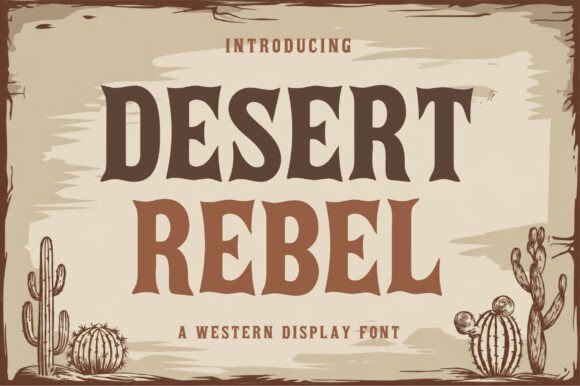
When a design project calls for the spirit of the frontier, standard typography often falls short. You need lettering that carries weight, history, and a distinct sense of place. Desert Rebel is a bold western display font crafted specifically to fill this niche. Inspired directly by vintage cowboy posters and the rugged aesthetics of dusty desert landscapes, it offers more than just a stylistic choice; it provides an immediate atmospheric anchor for your work. Featuring sharp serif details and rugged curves, this typeface captures a classic western vibe that feels authentic rather than costumey.
For designers, crafters, and business owners, selecting the right display font is about communication. Desert Rebel speaks a visual language of independence and tradition. Its strong character style brings an authentic wild west feel to any design project, making it an essential tool for retro branding, saloon posters, apparel designs, and vintage-themed creations. Whether you are designing a logo for a new barbecue joint or creating personalized Cricut projects for a country wedding, understanding the nuances of this font will help you leverage its full potential.
Defining the Aesthetic and Character
To use Desert Rebel effectively, it helps to understand what makes it visually distinct from other novelty fonts. Many western-style typefaces rely on excessive ornamentation or exaggerated shapes that can look cartoonish at larger sizes. In contrast, this font balances boldness with structural integrity. The sharp serif details provide a crisp edge that ensures legibility, while the rugged curves soften the overall appearance, preventing it from feeling too rigid or industrial.
This balance is what gives the font its versatility. It possesses enough grit to work on a weathered wooden sign but retains enough refinement to appear on high-end packaging. The letterforms are designed to evoke the hand-painted signage of the late 19th and early 20th centuries, yet they are vectorized with modern precision. This means that whether you are cutting vinyl for a t-shirt or printing a large-format banner, the edges remain clean and the proportions stay true. It is a bridge between historical nostalgia and contemporary design standards.
Practical Applications for Creators and Businesses
The value of a display font lies in its application. Desert Rebel shines in contexts where personality and theme are paramount. For small business owners and entrepreneurs, establishing a cohesive brand identity is crucial. If your business relates to outdoor lifestyle, heritage goods, artisanal food, or western wear, this font serves as an excellent primary logotype or headline face. It instantly signals your industry and values without requiring additional graphical elements.
For the maker community and hobbyists, particularly those using cutting machines like Cricut or Silhouette, the font’s construction is highly practical. The bold strokes and connected serifs allow for easier weeding and application on various surfaces. Thin, spindly western fonts often tear during transfer or fail to adhere properly to textured materials like canvas or distressed wood. Desert Rebel’s substantial weight makes it ideal for:
- Apparel Design: Creating statement tees, trucker hats, and bandanas that require high visibility and durability.
- Event Stationery: Setting the tone for rustic weddings, barn dances, or themed parties through invitations and welcome signs.
- Packaging and Labels: Adding a premium, handcrafted touch to hot sauce bottles, coffee bags, or candle labels.
- Social Media Graphics: Generating thumb-stopping headlines for Instagram or Pinterest that convey a specific mood instantly.
Educational and Historical Contexts
Beyond commercial and personal crafting, this typeface has utility in educational and cultural settings. Educators teaching American history, literature, or regional studies can use Desert Rebel to create immersive presentation slides, worksheets, and classroom decor. Typography plays a subtle but powerful role in learning environments; using a font that reflects the era being studied helps students connect emotionally and visually with the material. Similarly, museums, historical societies, and reenactment groups can utilize the font for wayfinding, exhibit titles, and promotional materials to maintain historical accuracy and atmosphere.
Best Practices for Pairing and Layout
A common mistake when working with thematic display fonts is overusing them. Desert Rebel is a loud voice in the typographic hierarchy. It demands attention and should be used sparingly to maintain its impact. It works best when paired with simpler, more neutral typefaces. Consider combining it with a clean sans-serif for body copy or a traditional slab serif for subheadings. This contrast allows the western elements to stand out without overwhelming the viewer or compromising readability.
Spacing is another critical consideration. Because of its rugged curves and decorative serifs, tight tracking (letter spacing) can sometimes cause visual clutter. When setting headlines in Desert Rebel, try increasing the tracking slightly to let each character breathe. This not only improves legibility but also enhances the vintage aesthetic, as older hand-lettered signs often featured generous spacing. Conversely, if you are stacking words vertically in a logo lockup, you may need to adjust the leading (line height) to ensure the ascenders and descenders do not collide awkwardly.
Important Considerations Before Use
Before integrating Desert Rebel into your next project, there are several practical factors to evaluate. First, consider the medium and scale. While this font is versatile, its intricate serif details may be lost at very small sizes. It is primarily a display font, meaning it is optimized for headings, logos, and short phrases rather than paragraphs of text. If you need to convey detailed information, reserve Desert Rebel for the title and choose a highly readable companion font for the rest.
Licensing is equally important for professionals and entrepreneurs. Always verify the specific license terms associated with your download. Personal use licenses typically cover hobbyist projects and non-commercial creations, while commercial licenses are required for products intended for sale, client work, or business branding. Ensuring you have the correct rights protects your business and supports the type designer who created the asset.
Finally, think about color and texture. Desert Rebel was inspired by dusty landscapes and vintage posters, so it responds beautifully to earthy tones, muted pastels, and textured overlays. However, it is also surprisingly effective in high-contrast monochrome. Testing your design in black and white before applying color effects ensures that the font’s structure holds up on its own. By respecting the font’s inherent characteristics and limitations, you can create designs that feel both professionally executed and genuinely evocative of the wild west.